
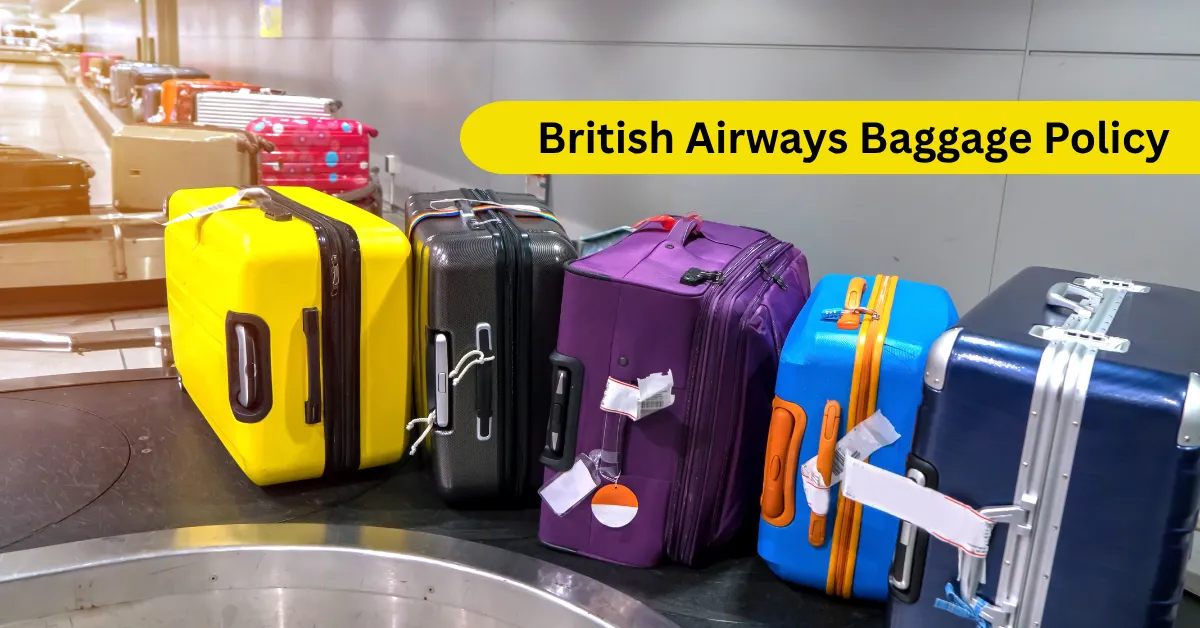
When you travel with British Airways, baggage rules can change depending on your ticket type, cabin class, route, and even your frequent flyer status. That is why it is important to check your British Airways Baggage Policy before you start packing. A little planning can save you money, stress, and time at the airport.
British Airways generally allows a cabin bag and a small personal item on board, while checked baggage depends on the fare you bought. Economy fares usually have the least allowance, while Premium Economy, Business, and First Class usually include more bags and higher weight limits. If you understand the rules early, you can avoid last-minute surprises at check-in.
What British Airways Baggage Policy Covers
The British Airways Baggage Policy covers several different types of luggage. These include cabin bags, personal items, checked bags, oversized items, sports equipment, and special items for children or infants. It also explains what happens if your bag is too heavy, too large, or you need to carry extra luggage.
British Airways uses both piece-based and weight-based baggage rules depending on the route and cabin. In simple words, some tickets allow you to bring a fixed number of bags, while other tickets may use a total weight allowance. This is why two passengers on the same flight may have different baggage rights.
Cabin Baggage Rules
British Airways usually allows passengers to take one cabin bag and one personal item on board. The cabin bag is the larger piece, while the personal item is smaller and should fit under the seat in front of you. This is helpful for items you need during the flight, such as a phone, documents, medicines, or a laptop.
A common cabin bag size limit is around 56 x 45 x 25 cm, including wheels and handles. A personal item is usually much smaller, often around handbag or laptop bag size. Even if your bag looks small enough, staff may still check it if the flight is full, so it is wise to pack neatly and stay within limits.
Checked Baggage Allowance
Your checked baggage allowance on British Airways depends mostly on your cabin class and fare type. Economy tickets may include one checked bag or none at all, depending on the fare you selected. Premium Economy, Business, and First Class passengers usually get more generous allowances.
A typical allowance looks like this:
-
Economy Basic: often no checked bag included.
-
Economy Standard or Plus: usually one checked bag.
-
Premium Economy: usually two checked bags.
-
Business Class: usually two checked bags.
-
First Class: usually three checked bags.
The weight limit per bag is also important. On many British Airways routes, each checked bag may be limited to 23 kg in economy and 32 kg in higher cabins. If one bag goes over the limit, you may need to pay an extra fee or repack before check-in.
Size and Weight Limits
The British Airways Baggage Policy is not only about how many bags you can carry. It also includes size and weight limits for each piece of luggage. If your suitcase is too large, too heavy, or shaped oddly, it may be treated as oversized baggage.
A common checked bag size limit is 90 x 75 x 43 cm, including handles and wheels. For cabin bags, the size is much smaller so it can fit in the overhead bin or under the seat. Weight rules matter just as much as size rules, because a bag that looks fine from the outside can still be rejected if it is too heavy.
Extra Bags and Fees
If you need to carry more than your free baggage allowance, British Airways usually lets you buy extra baggage. This is often cheaper online in advance than at the airport. Paying early can help you avoid stress and sometimes save money.
Extra baggage fees depend on the route, destination, and the type of extra bag you need. Heavy bags and oversized bags usually cost more than standard extra bags. A simple rule is this: the earlier you check your allowance, the better chance you have of avoiding high airport charges.
Overweight and Oversized Bags
Overweight and oversized bags are handled more strictly than normal bags. If your suitcase is heavier than the allowed limit, British Airways may charge a heavy bag fee. In some cases, if a bag exceeds the maximum accepted weight, it may not be allowed at all.
This is why bathroom scales at home can be very useful before travel. Even a small weight difference can matter when you are close to the limit. If you are traveling with gifts, winter clothes, or shopping items, it is smart to leave a little space in your luggage for the return journey.
Baggage Rules for Children and Infants
Children and infants often have special baggage rules under the British Airways Baggage Policy. Infants who do not have their own seat may be allowed to bring a checked bag on certain fares, and families can often carry useful baby items such as a stroller, car seat, or travel cot. These allowances can make family travel much easier.
It is always a good idea to check the exact rules for your ticket and route, because baggage rights may vary. Families often travel with more luggage than solo travelers, so knowing the policy in advance helps avoid confusion at the airport. If you are flying with a baby, pack essentials like diapers, medicine, food, and spare clothes in your cabin bag.
Sports Equipment and Special Items
British Airways also has rules for special items such as sports equipment, musical instruments, and fragile goods. These items may not fit standard baggage rules and may need special handling. Some can be checked as normal luggage, while others may require advance notice or extra payment.
If you are carrying a golf bag, skis, surfboard, or a musical instrument, check the special baggage rules before you travel. These items can be larger, heavier, or more delicate than normal bags, so they need extra care. Packing them properly can prevent damage and reduce the chance of extra fees.
Liquid and Security Rules
Like most airlines, British Airways follows airport security rules for liquids in cabin baggage. Liquids, gels, creams, and aerosols usually must be packed in small containers and placed in a clear bag when taken through security. This rule applies even if your cabin bag is within size limits.
Items like sharp objects, tools, and some restricted products may not be allowed in your hand luggage. Some items can go in checked baggage, while others are banned completely. Before you leave for the airport, it is smart to review your items carefully so you do not have to throw anything away at security.
Tips to Avoid Extra Charges
A few simple habits can help you stay within the British Airways Baggage Policy and avoid extra charges. First, check your allowance when you book, not the day before your flight. Second, weigh your bags at home so you do not get a surprise at the airport.
Here are some easy packing tips:
-
Use a lightweight suitcase.
-
Put heavy items in your cabin bag only if allowed.
-
Wear your heaviest shoes and jacket while traveling.
-
Roll clothes instead of folding them to save space.
-
Keep travel essentials in your personal item.
These small steps can make a big difference, especially if you travel often. They also make packing less stressful and help you stay organized.
British Airways Baggage Policy for Different Travelers
The baggage rules can feel different depending on how you travel. Business travelers often prefer to pay a little more for a fare that includes extra baggage, while holiday travelers may focus on finding the cheapest fare and then adding baggage only if needed. Families usually need to think about both checked luggage and cabin items for children.
Frequent flyers with elite status may receive extra baggage benefits. This can be helpful for long trips or multi-city travel. If you fly British Airways often, it is worth checking whether your loyalty status gives you added baggage rights.
How to Check Your Allowance
The easiest way to understand the British Airways Baggage Policy for your trip is to check your booking details before you pack. Your allowance can depend on your fare, route, and cabin class, so assuming all tickets are the same can lead to mistakes. One passenger may have no checked bag, while another may have two or more.
Always confirm these details:
-
Number of checked bags allowed.
-
Maximum weight per bag.
-
Cabin bag size limit.
-
Personal item rules.
-
Extra baggage fees for your route.
This takes only a few minutes, but it can save you a lot of trouble later. It also helps you pack smarter and avoid repacking at the airport.
Simple Packing Example
Imagine you are flying in Economy with one checked bag allowance. You pack one suitcase that weighs 22 kg, plus a cabin bag and a small backpack. If your cabin bag fits the size rules and your suitcase stays under the limit, you should be fine.
Now imagine the suitcase weighs 26 kg. In that case, you may need to remove items or pay an extra fee. This example shows why it is always better to weigh your bags before you leave home.
Final Words
The British Airways Baggage Policy is easy to understand once you break it into simple parts: cabin baggage, checked baggage, size limits, weight limits, and extra fees. If you check your allowance early, pack carefully, and keep an eye on size and weight, you can travel more smoothly and avoid unnecessary charges.
Using the right baggage strategy can make your British Airways trip much easier. A few minutes of planning before departure can save both money and stress at the airport


Leave a Reply